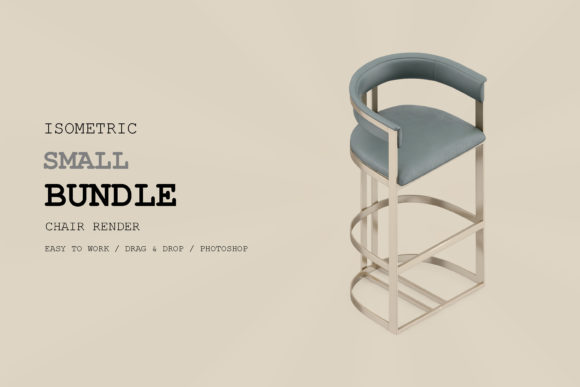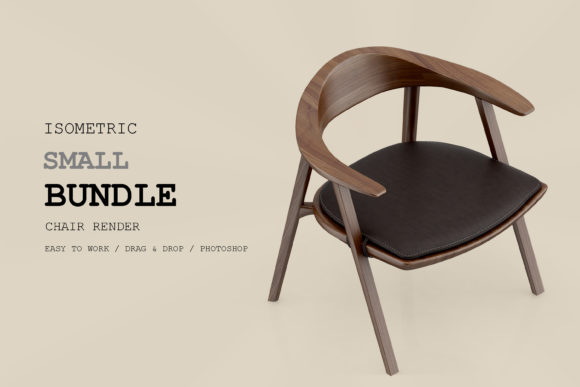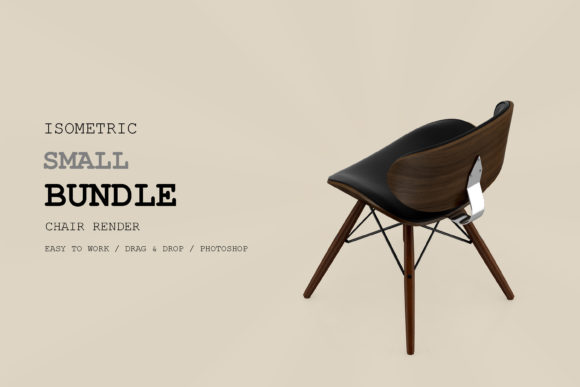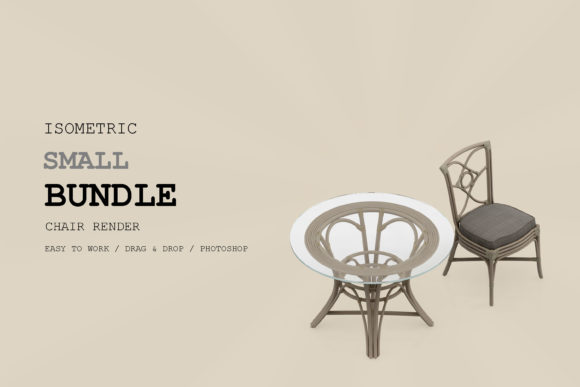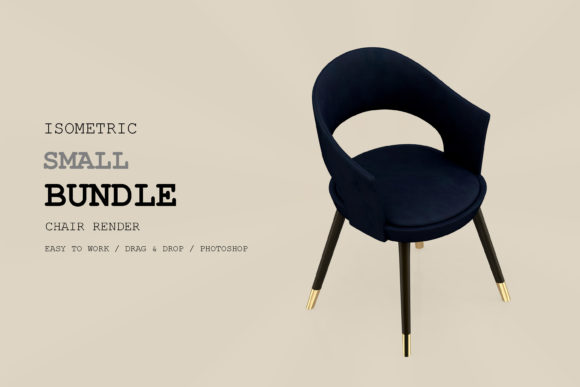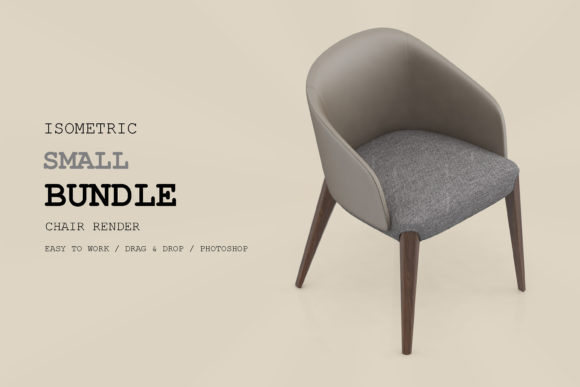
Evaluating Isometric Chair 3D Render Pack 157 for Professional and Academic Visual Projects
In the realm of digital design, visual clarity and structural accuracy are paramount. Whether you are an interior architect presenting a concept to a client, a graphic designer crafting social media assets, or a student illustrating a technical report, the choice of visual resources significantly impacts the final outcome. Isometric Chair 3D Render Pack 157 emerges as a specialized tool designed to meet these diverse needs. This resource is not merely a collection of images; it is a structured set of high-fidelity 3D renders that prioritize organization, resolution, and versatility. For professionals evaluating asset libraries, understanding the specific technical attributes of this pack—such as its separated layers, shadow handling, and print-ready specifications—is essential to determining its fit within your workflow.
Technical Specifications and Workflow Efficiency
The primary differentiator of Isometric Chair 3D Render Pack 157 lies in its technical preparation. Unlike flat image files that require extensive post-processing to isolate elements, this pack offers organized layers. This feature allows designers to manipulate individual components of the chair without affecting the background or other structural parts. In complex design compositions, such as a room layout or a product catalog, the ability to adjust lighting, recolor materials, or reposition parts independently saves significant time. It transforms a static image into a dynamic component of a larger design system.
Furthermore, the inclusion of a separated shadow adds a layer of realism that is often difficult to achieve with standard clipart. Shadows provide depth and ground the object in its environment, preventing the "floating" effect common in lower-quality graphics. When combined with the option for a separated background, users gain maximum control over how the chair integrates into various scenes. This separation is particularly valuable for compositing, where the chair might need to be placed against a textured wall, a solid color backdrop, or within a photorealistic architectural visualization.
For those working in print media, the DPI 300 specification is critical. Standard screen resolutions (72 DPI) are insufficient for high-quality physical prints, leading to pixelation and blurry edges. By providing assets at 300 DPI, Isometric Chair 3D Render Pack 157 ensures crisp lines and smooth gradients when printed on brochures, posters, or large-format displays. This makes the pack suitable for both digital-first and hybrid projects that bridge the gap between web and print.
Comparative Analysis: Format Versus Alternatives
When selecting 3D assets, designers typically choose between vector illustrations, raster photographs, and 3D model files (.obj, .fbx). Each format has distinct advantages and limitations. Vector graphics offer infinite scalability but can sometimes lack the textural depth required for realistic furniture representation. Photorealistic images offer high fidelity but lack flexibility; if the angle or lighting does not match the project’s needs, the image cannot be easily altered.
Isometric Chair 3D Render Pack 157 occupies a strategic middle ground. The isometric projection provides a clear, distortion-free view that is highly effective for technical diagrams, infographics, and UI/UX design. Unlike full 3D models, which require powerful hardware and rendering software to visualize, these pre-rendered assets are immediately usable in standard design tools like Adobe Photoshop, Illustrator, or Figma. This reduces the barrier to entry for designers who may not have advanced 3D modeling skills but still require professional-grade visuals.
However, tradeoffs exist. If a project requires a dynamic, rotating view of the chair, a static render pack—even one with multiple angles—will fall short compared to an interactive 3D model. Similarly, if the goal is absolute photorealism with complex material interactions (like subsurface scattering in leather), pre-rendered images may appear slightly stylized. Therefore, while this pack excels in clarity and ease of use, it is best suited for projects where schematic accuracy and clean aesthetics are prioritized over hyper-realism.
Ideal Use Cases and Application Scenarios
The versatility of Isometric Chair 3D Render Pack 157 allows it to serve a wide array of industries. Its structured nature makes it particularly effective in contexts where information hierarchy and visual consistency are key.
- Architecture and Interior Design: Architects often use isometric views to explain spatial relationships in floor plans. Integrating detailed chair renders helps clients visualize furniture placement without cluttering the technical drawing. The separated shadow ensures the furniture feels grounded in the proposed space.
- School Projects and Educational Materials: For students in design, engineering, or art disciplines, this pack provides a reliable reference for furniture forms. The organized layers allow educators to demonstrate assembly processes or material properties by isolating specific parts of the chair.
- Social Media and Digital Advertising: In the fast-paced world of social media, attention spans are short. Clean, high-resolution isometric graphics stand out in crowded feeds. The pack’s ready-to-use formats enable marketers to create consistent brand aesthetics across Instagram, LinkedIn, and Pinterest campaigns quickly.
- Website and E-commerce Design: Product pages benefit from multiple views of a chair. While this pack may not replace professional photography for sales, it serves well in blog posts, comparison articles, or informational sections where a clear, stylized representation is more appropriate than a commercial photo.
- Print Projects: From annual reports to magazine layouts, the 300 DPI resolution ensures that every line remains sharp. The separated background allows for creative integration into editorial designs, enabling designers to overlay text or combine the chair with other graphical elements seamlessly.
Decision Factors: When to Choose This Pack
Selecting the right asset depends on specific project requirements. Isometric Chair 3D Render Pack 157 is an excellent choice when speed, consistency, and editability are priorities. If you are working on a deadline and need to produce multiple variations of a scene, the organized layers and separated shadows eliminate the need for manual masking or shadow painting. This efficiency is crucial for agencies managing tight schedules or freelancers handling multiple clients.
Additionally, if your audience includes non-designers, such as stakeholders in architecture firms or teachers in academic settings, the isometric style offers an intuitive understanding of form and space. It removes the ambiguity of perspective drawings, making communication clearer. The inclusion of a help file further supports users who may be less familiar with complex design software, guiding them through the structure of the files and ensuring they can leverage the assets effectively.
Conversely, if your project demands a highly specific, unique aesthetic that differs from standard isometric styles, or if you require real-time 3D interaction, this static render pack may not be sufficient. In such cases, investing in a full 3D model library or commissioning custom photography might yield better results. However, for the vast majority of illustrative, informational, and promotional design tasks, Isometric Chair 3D Render Pack 157 offers a robust, high-quality solution that balances professional standards with practical usability.
Conclusion on Utility and Value
Evaluating Isometric Chair 3D Render Pack 157 reveals a resource built for precision and adaptability. Its combination of high resolution, layered organization, and thoughtful separation of elements addresses common pain points in digital design workflows. By avoiding the limitations of flat vectors and the complexity of raw 3D models, it provides a streamlined path to professional-looking visuals. Whether used for enhancing a blog post, supporting an architectural proposal, or creating engaging social media content, this pack stands out as a reliable tool for anyone seeking clarity and quality in their visual communications.