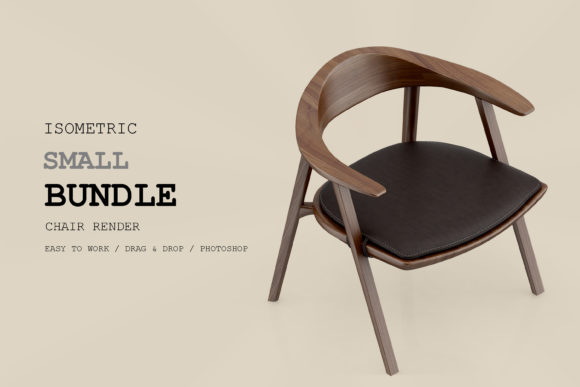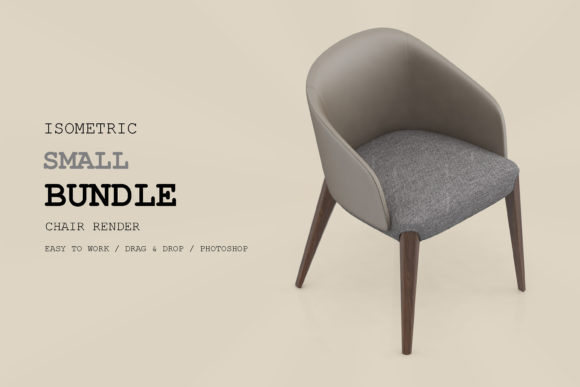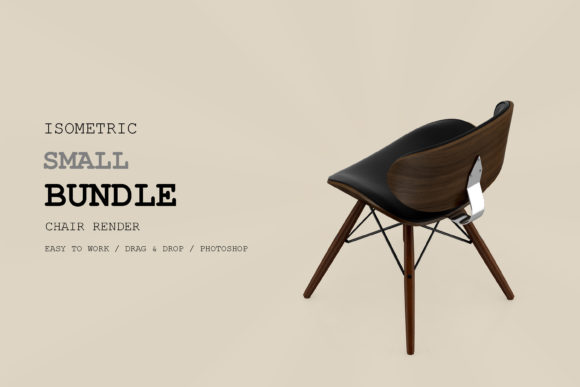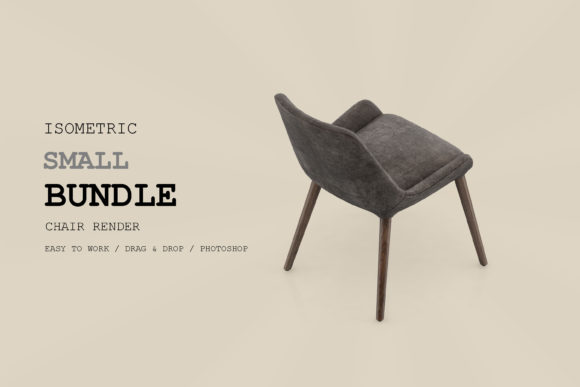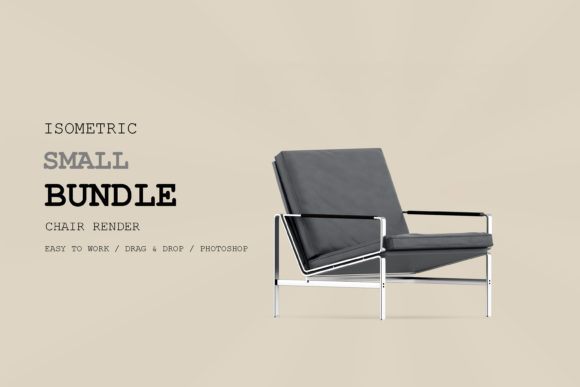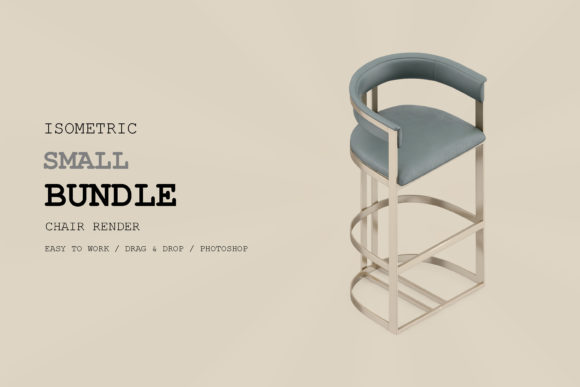
Evaluating Isometric Chair 3D Render Pack 289 for Professional and Creative Projects
In the landscape of digital design assets, finding high-quality, versatile 3D models is often a bottleneck for creatives. Whether you are an interior architect finalizing a presentation, a social media manager crafting engaging content, or a student working on a complex thesis project, the demand for clean, scalable, and technically sound visual resources is constant. Isometric Chair 3D Render Pack 289 emerges as a specialized solution designed to address these needs by offering a curated collection of furniture assets that prioritize both aesthetic appeal and technical utility.
This assessment explores the specific features of this render pack, analyzing its technical specifications, potential applications across various industries, and how it stacks up against general-purpose 3D libraries. By understanding the nuances of organized layers, separated backgrounds, and high-resolution outputs, designers can determine whether this resource aligns with their workflow requirements.
Technical Specifications and Workflow Efficiency
The primary differentiator of Isometric Chair 3D Render Pack 289 lies in its preparation for immediate use. Unlike raw 3D model files (such as .obj or .fbx) that require significant post-processing, lighting setup, and rendering time, this pack delivers pre-rendered assets. This distinction is crucial for professionals who need to produce visuals quickly without sacrificing quality.
Several key technical attributes define the value proposition of this pack:
- High Resolution and DPI 300: The images are rendered at a resolution suitable for both digital screens and high-quality print materials. A DPI (dots per inch) of 300 is the industry standard for professional printing, ensuring that chairs, tables, and other furniture elements remain crisp when included in brochures, posters, or architectural plans.
- Separated Background: Each asset is provided with a transparent or isolated background. This eliminates the tedious task of manual masking in photo editing software like Photoshop or Illustrator. Designers can drop these elements directly into their compositions, maintaining precise control over shadows and placement.
- Organized Layers: For those who prefer to manipulate individual components, the inclusion of organized layers allows for greater flexibility. Users can adjust the position of cushions, change leg angles, or isolate specific parts of the chair without affecting the entire object. This level of granularity is rare in pre-made render packs.
- Separted Shadow: Shadows are often the most challenging element to integrate realistically. By providing separated shadow layers, the pack allows designers to adjust opacity, blur, and position independently from the main object. This ensures that the furniture appears grounded and realistic within any environment, whether it is a white void or a complex interior scene.
- Help File Inclusion: Technical resources are only as good as their documentation. The inclusion of a help file provides clear instructions on how to import and utilize the assets in popular design software. This reduces the learning curve and ensures that users can maximize the utility of the pack from day one.
Comparing Pre-Rendered Packs vs. Raw 3D Models
When selecting assets, designers often face a choice between downloading raw 3D models and using pre-rendered image packs. Understanding where Isometric Chair 3D Render Pack 289 fits into this spectrum helps clarify its best use cases.
Raw 3D Models offer maximum flexibility. You can rotate them in any direction, apply custom textures, and animate them. However, they require a powerful computer, knowledge of rendering engines (like V-Ray, Corona, or Blender Cycles), and significant time investment. If your project requires a unique camera angle or a specific material finish not provided in the pack, raw models are the superior choice.
Pre-Rendered Image Packs, such as this one, prioritize speed and consistency. They guarantee a uniform lighting style and color palette across all assets. This is particularly valuable for brand identity projects where visual cohesion is paramount. While you cannot rotate a pre-rendered image, the trade-off is a streamlined workflow that allows you to focus on composition and layout rather than technical rendering settings.
For projects requiring strict isometric perspectives—a style favored in modern UI design, infographics, and minimalist presentations—this pack offers a distinct advantage. Isometric views provide a sense of depth without the distortion of perspective, making them ideal for floor plans, product showcases, and educational diagrams. Sourcing consistent isometric renders manually is difficult; having a dedicated pack simplifies this process significantly.
Practical Applications Across Industries
The versatility of Isometric Chair 3D Render Pack 289 makes it relevant to a wide range of creative fields. Below are specific scenarios where this resource proves particularly effective.
Architecture and Interior Design
Architects and interior designers frequently use isometric views to communicate spatial relationships to clients who may not be familiar with reading traditional blueprints. These renders allow stakeholders to visualize how furniture fits within a room’s dimensions. Because the pack includes separated shadows and high-resolution details, architects can overlay these chairs onto their own CAD drawings or 3D walkthroughs with ease. The organized layers also allow for quick swaps; if a client prefers a different chair style, the designer can replace the asset while maintaining the exact lighting and perspective.
Social Media and Digital Advertising
In the fast-paced world of social media, content creators need visually striking graphics that capture attention quickly. Isometric illustrations are trending on platforms like Instagram and LinkedIn due to their clean, modern aesthetic. Using Isometric Chair 3D Render Pack 289, marketers can create eye-catching posts for furniture brands, home decor blogs, or lifestyle campaigns. The separated background feature means these elements can be integrated into branded templates instantly, reducing production time for daily content calendars.
Educational Materials and School Projects
Students in graphic design, architecture, and marketing courses often struggle to find high-quality assets for their portfolios. Textbook examples are often outdated or low-resolution. This pack provides a professional-grade resource that elevates the quality of academic submissions. The help file is particularly useful for students who are still mastering design software, offering guidance on how to properly layer and composite the images. It serves as a practical tool for learning about spatial arrangement and visual hierarchy.
Web Design and Blogs
Website designers looking to break away from generic stock photography often turn to isometric illustrations to add personality to landing pages and blog headers. These assets are lightweight compared to full 3D scenes and load faster, improving user experience and SEO performance. The high resolution ensures they look sharp on retina displays, while the consistent style helps maintain a cohesive brand voice throughout the site.
Decision Factors: When to Choose This Pack
While Isometric Chair 3D Render Pack 289 is a robust resource, it is not a universal solution. Evaluating your specific needs will help determine if this is the right purchase or download.
Choose this pack if:
- You need consistent isometric perspectives for a series of related images.
- Your workflow relies heavily on 2D compositing tools like Photoshop or Illustrator.
- You require print-ready assets with 300 DPI resolution.
- You want to save time on lighting and rendering setups.
- You appreciate the convenience of separated shadows and backgrounds.
Consider alternatives if:
- You need dynamic animations or video content.
- Your project requires extreme customization of geometry that exceeds the provided layers.
- You are working in a strictly real-time 3D environment (like a game engine) and need optimized mesh files rather than raster images.
- You require a wider variety of angles beyond the isometric perspective.
Maximizing Value Through Best Practices
To get the most out of Isometric Chair 3D Render Pack 289, users should adopt a systematic approach to asset management. Start by reviewing the help file to understand the recommended workflows for your specific software. Organize your library by furniture type (e.g., dining chairs, office chairs, lounge seating) to streamline future searches.
Furthermore, leverage the separated shadow layers creatively. Instead of using the default shadow, experiment with adjusting its opacity and color temperature to match the ambient light of your specific project. This small adjustment can make a pre-rendered asset feel like a native part of your scene. Similarly, use the organized layers to create variations. If a chair has removable cushions, use the layer visibility to show the chair with and without them, effectively doubling the utility of each asset in your pack.
Conclusion
Isometric Chair 3D Render Pack 289 represents a thoughtful intersection of aesthetic quality and technical efficiency. By addressing common pain points such as inconsistent lighting, difficult masking, and low-resolution outputs, it provides a reliable foundation for a wide array of design projects. Whether used for architectural visualization, digital marketing, or educational purposes, this pack offers a practical solution for professionals seeking to enhance their visual storytelling without compromising on time or quality. As with any design resource, its value is realized through intentional application and a clear understanding of its capabilities within your broader creative workflow.